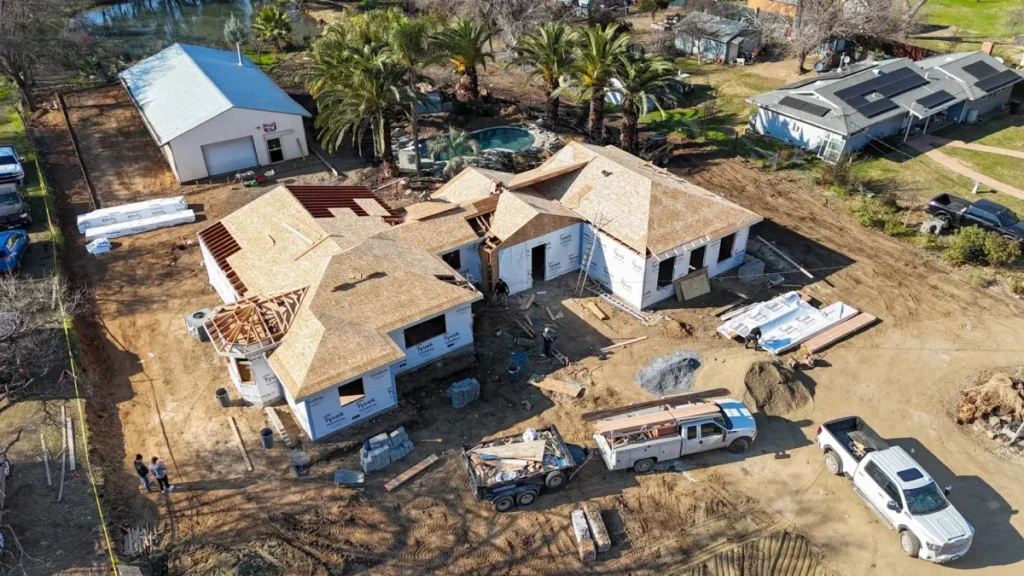
The cost of building a detached accessory dwelling unit in California varies depending on factors such as square footage, construction method, site conditions, and local permit requirements. Most homeowners spend between $250,000 and $400,000 for a typical detached ADU project, although prices can be lower for smaller units or higher for custom designs.
What is The Average Cost to Build a Detached ADU in California
The average cost to build a detached accessory dwelling unit in California typically ranges from $250,000 to $400,000 depending on the size, design complexity, and site conditions. In terms of construction cost per square foot, most detached units fall between $250 and $500 per square foot.
For example, a 600-square-foot detached ADU may cost between $180,000 and $300,000, while a 1,000-square-foot ADU can cost $300,000 to $450,000 or more depending on finishes and building requirements.
Several cost drivers influence the final project price, including:
- architectural design services
- building permit fees
- construction labor costs
- material selection
- site preparation requirements
- utility installation and connection
How Much does Cost Per Square Foot for Detached ADUs?
The cost per square foot for a detached accessory dwelling unit provides a helpful benchmark for estimating total construction expenses. Across most California residential construction markets, detached ADUs typically cost between $250 and $500 per square foot. Several factors influence the final price per square foot, including construction method, material quality, interior finishes, and site conditions.
Budget-Level ADU Construction
A budget-level detached ADU project usually costs between $200 and $300 per square foot. These projects often use simplified architectural designs, standard construction materials, and smaller floor plans.
Homeowners looking to minimize costs often choose prefabricated ADU units or compact studio layouts.
Mid-Range ADU Construction
Most homeowners build mid-range accessory dwelling units, which typically cost $300 to $400 per square foot.
These units often include:
- modern kitchen appliances
- upgraded interior finishes
- improved energy efficiency features
- larger floor plans
A mid-range detached ADU balances affordability with long-term property value improvement.
Luxury ADU Construction
A high-end detached ADU project may exceed $400 to $500 per square foot, especially in competitive urban real estate markets.
Luxury units often feature:
- custom architectural design
- premium building materials
- high-end interior finishes
- advanced smart home technology
In cities such as San Francisco or Los Angeles, luxury ADU projects can surpass $600 per square foot due to higher labor costs and complex site conditions.
Quick Cost Breakdown for a Detached ADU
Building a detached accessory dwelling unit involves multiple cost categories that contribute to the total construction budget. These include hard construction costs, soft development costs, and infrastructure expenses.
Below is a typical cost breakdown for a detached ADU project in California.
| Cost Component | Estimated Cost Range |
| Building permits and impact fees | $10,000 – $30,000 |
| Architectural design and engineering plans | $8,000 – $25,000 |
| Construction labor costs | $100,000 – $220,000 |
| Building materials and finishes | $80,000 – $180,000 |
| Utility connections and service upgrades | $10,000 – $40,000 |
| Site preparation and grading work | $5,000 – $50,000 |
The largest portion of the budget usually goes toward construction labor and building materials, which together account for most of the total project cost.
What Factors Affect the Cost of Building a Detached ADU?
Several variables determine how much homeowners ultimately spend on a detached ADU construction project. Understanding these factors helps property owners estimate realistic budgets and avoid unexpected expenses.
Key factors include ADU size, construction method, location within California, and site infrastructure requirements.
ADU Size and Square Footage
The square footage of the accessory dwelling unit is one of the most important cost factors. Larger units require more building materials, labor hours, and engineering work, which increases the total project price.
Typical detached ADU size categories include:
Studio ADU (400–500 square feet)
A studio accessory dwelling unit is the smallest and most affordable type of ADU. These compact units often include an open living area, kitchenette, and bathroom, making them ideal for short-term rentals or guest housing.
One-Bedroom ADU (500–800 square feet)
A one-bedroom ADU floor plan offers more privacy and is commonly used for long-term rental income or family housing. Because of the additional interior walls, plumbing fixtures, and appliances, costs are typically higher than studio units.
Two-Bedroom ADU (800–1,200 square feet)
A two-bedroom detached ADU provides enough space for small families or multi-generational living arrangements. These units require more extensive foundation work, structural framing, and utility infrastructure, increasing the overall construction cost.
In general, larger ADU floor plans result in higher construction budgets, although the cost per square foot may decrease slightly as the unit size increases.
Location Within California
The geographic location of the property plays a major role in determining the cost of building a detached accessory dwelling unit.
Different cities and counties have varying permit fees, labor costs, and local zoning requirements.
For example:
Los Angeles ADU construction costs tend to be higher due to strong demand for licensed contractors and stricter building code compliance requirements.
San Diego ADU building costs may include additional coastal development regulations, which can increase the complexity of the permit approval process.
In the San Francisco Bay Area, the combination of high labor rates, engineering requirements, and site preparation challenges can push total project costs well above the statewide average.
Meanwhile, areas such as Sacramento and inland California regions may offer lower construction labor rates, resulting in slightly more affordable ADU development costs.
Site Preparation and Infrastructure
Another major cost driver is site preparation work, which includes preparing the land for the new residential structure.
Common site preparation tasks include:
- land grading and excavation
- foundation construction
- concrete slab installation
- drainage system setup
- utility trenching
If the property requires extensive grading work, retaining walls, or soil stabilization, the site development costs can increase significantly.
In addition, homeowners must install or extend utility infrastructure such as water lines, sewer connections, electrical service panels, and gas pipelines.
These utility connection costs can range from $10,000 to $40,000, depending on the distance from existing systems and the complexity of the installation.
Cost As Per Construction Methods for Detached ADUs in California
The construction method for a detached accessory dwelling unit significantly affects the total ADU construction cost, project timeline, and design flexibility. Homeowners in California typically choose between stick-built construction, prefabricated ADU construction, and modular building systems.
Each method has different implications for labor costs, material costs, permit approval, and construction timelines.
Stick-Built Detached ADU
A stick-built ADU is constructed entirely on-site using traditional wood framing, structural beams, and custom building materials. This approach is the most common method used by licensed contractors in California residential construction projects.
Typical cost range for a stick-built detached ADU:
- $300 to $500 per square foot
- Higher costs for custom architectural designs
- Longer construction timelines
Prefabricated ADU Construction
A prefabricated ADU, often called a prefab accessory dwelling unit, is partially or fully built in a factory-controlled environment before being transported to the property for installation.
However, homeowners must still account for expenses related to:
- foundation construction
- utility connections
- transportation and crane installation
- local building permit approval
Even though the structure is built off-site, the project must still meet California building codes, local zoning requirements, and Title 24 energy standards.
Typical cost range for a prefabricated detached ADU:
- $200 to $400 per square foot
- Shorter construction timelines
- Reduced on-site labor requirements
Modular ADU Construction
A modular accessory dwelling unit is constructed using factory-built modules that are assembled on-site to form a complete residential structure.
The key benefits of modular ADU construction include:
- faster construction timelines
- controlled manufacturing quality
- reduced material waste
- predictable project costs
Typical cost range for a modular detached ADU:
- $250 to $450 per square foot
- moderate construction timelines
- fewer on-site construction delays
Many California homeowners choose modular construction as a balance between cost efficiency and design flexibility.
Permit and Regulatory Costs in California
Before building a detached accessory dwelling unit, homeowners must obtain approval from their local city planning department or county building authority.
California has enacted several statewide ADU laws designed to streamline the permit approval process, but property owners must still comply with local zoning regulations and building code requirements.
One of the most important regulations is California Government Code 65852.2, which requires cities to approve qualifying ADU permit applications within 60 days.
Despite the simplified approval process, several permit-related expenses can add to the total project budget.
Typical ADU permit costs include:
- planning department application fees
- building permit fees
- plan check review fees
- structural engineering review fees
- inspection fees during construction
Depending on the city and project complexity, total permit and regulatory costs usually range between $10,000 and $30,000.
Use a Cost Estimator for Detached ADU Construction
Detached ADU construction costs vary based on size, site work, and utility installation. These factors can quickly impact your total budget, especially in high-cost California areas. To plan more accurately, use our detached ADU construction cost calculator and estimate your project cost based on your design and property conditions.
Financing Options for Building an ADU
Because a detached accessory dwelling unit construction project can require a large upfront investment, many homeowners use specialized home financing options to cover the costs.
Several financial products are commonly used to fund ADU construction projects.
Home Equity Loan
A home equity loan allows property owners to borrow against the equity in their primary residence. This type of loan typically offers a fixed interest rate and predictable monthly payments, making it a popular option for home improvement projects.
Homeowners with significant property equity often use this financing method to cover construction expenses, permit fees, and contractor costs.
Home Equity Line of Credit (HELOC)
A home equity line of credit, often called a HELOC, functions similarly to a credit line secured by property equity.
Instead of receiving a lump sum, borrowers can withdraw funds as needed throughout the construction process.
This flexible financing structure works well for projects where construction costs occur in stages, such as during foundation work, framing, and interior finishing.
Cash-Out Refinance
A cash-out refinance loan replaces the homeowner’s existing mortgage loan with a larger loan amount, allowing the borrower to receive the difference in cash.
The additional funds can then be used to pay for ADU construction costs, including design services, permit fees, and building materials.
Many homeowners choose this option when mortgage interest rates are favorable.
Frequently Asked Questions
A 1,000-square-foot detached accessory dwelling unit in California typically costs between $250,000 and $450,000, depending on the construction method, interior finishes, site preparation requirements, and local permit fees.
The most affordable way to build an accessory dwelling unit is usually by choosing a prefabricated ADU model, selecting a smaller floor plan, and simplifying the architectural design. These strategies reduce construction labor costs and minimize the complexity of the building process.
Yes. A properly permitted detached accessory dwelling unit can significantly increase the market value of a residential property. Buyers often view ADUs as valuable assets because they provide additional living space and potential rental income opportunities.
Permit costs for a detached ADU construction project typically range from $10,000 to $30,000, depending on the city and the complexity of the construction plans. These costs usually include planning department fees, plan check review fees, and building inspection charges.
Most California ADU regulations allow detached accessory dwelling units up to 1,200 square feet, although exact limits depend on the local zoning ordinance, lot size, and setback requirements.